
Student Privacy
Every student and adolescent is determined to maintain their sense of privacy. For TGE and LGBTQ+ students alike, the disclosure of their sexual orientation or gender identity, however, can carry particular risks. A student who is publicly known as TGE or LGBTQ+ at school may not be known in the same way at home, in certain classrooms, or within their broader community.
Outing, or revealing that information without the student's knowledge or permission, can expose that student to harassment, family rejection, housing instability, abuse, or other forms of harm. Even when an educator believes a family may respond supportively, the decision to disclose a student's TGE or LGBTQ+ identity should not be made casually, nor should it be assumed that family's will actually do so.
Before using a student's name or pronouns with others, ask privately:
- What name and pronouns would you like for me to use with you? With your classmates? With your family? With other teachers/administrators?
- What should appear in email, learning management systems (e.g., Canvas, Moodle, Blackboard), rosters, or other written materials?
- Are there particular people or settings in which you do not want this information shared?
A student's preference may change over time or differ according to context. Store sensitive information carefully, record only what's necessary, and avoid discussing the student's identity with colleagues who do not have a legitimate need to know.

Names, Pronouns, & Disclosure
Using a TGE student's chosen name and pronouns can be a critical form of recognition and support. However, the legal rules governing these practices are no longer uniform across the United States.
Some states and districts protect students' abilities to use names and pronouns consistent with their gender identity. Others require parental notification and/or permission, restrict what educators may use, or even protect school staff who decline to use affirming praxis. Some parental notification requirements have also been challenged and/or temporarily blocked in court.
Educators should determine:
- Whether their state's laws regulate student names, pronouns, or parental notification
- Whether the district has a policy for supporting student gender identity and/or the maintenance of gender identity records for TGE students
- Whether families can see preferred name or pronoun options in learning management or school systems
- Who is authorized to change an official record
- Whether different rules apply to unofficial classroom use
- What procedures apply when a student fears abuse, rejection, or homelessness
Don't treat a student's TGE identity as evidence that the student is in danger, experiencing a mental health crisis, or being abused. Identity alone does not trigger emergency disclosure or mandatory reporting. If a student reports abuse, neglect, a credible safety threat, or another circumstance covered by mandatory reporting requirements, follow the same applicable procedures used for other students while sharing no more information than necessary.
Perhaps most importantly, don't promise secrecy that you may be unable to maintain. One way of informing the student of this reality is:
"Thanks for telling me. I'll be respectful and share as little as possible. Just a heads up, before you tell me anything else, I also want you to know that sometimes the law may require me to tell somebody else. If that happens, I'll try to tell you what's happening and include you in the process whenever I can. I just want to be honest."
FERPA and Education Records
The Family Educational Rights and Privacy Act (FERPA) protects personally identifiable information contained in student education records at institutions receiving applicable federal funding. It also generally gives parents the right to inspect their child's education records when the child is under 18 years of age. Those rights transfer to the student after they become 18 or graduate.
FERPA is important but its protections aren't always obvious. A student's disclosure during a private conversation isn't automatically an "educational record," and every inappropriate disclosure of a student's private information (while problematic) is not necessarily a FERPA violation. Whether FERPA applies depends partly on where the information originated, whether it was recorded or maintained by the institution, and how it was shared.
This doesn't mean that casual disclosure or outing is okay. Disclosing a student's identity is a big decision and as such should be balanced carefully against professional ethics, district policy, state privacy protections, and concerns for student safety.
Educators should be particularly careful when entering names, pronouns, gender markers (as applicable), or related notes into:
- Systems with student information
- Learning management platforms
- Email and messaging services
- Gradebooks and attendance records
- Substitute teacher materials
- IEP,'s, 504 plans, or accommodation records
- Discipline, counseling, or administrative records
Information entered into these systems may be accessible to families, administrators, other employees, or (at times) third parties. Before recording sensitive information, when possible determine who can see it and whether it must be entered at all.
Title IX and Current Legality
State constitutions, Civil Rights laws, educational statutes, court rulings, and local policies may provide protections beyond the Presidential administration's interpretation. Conversely, a growing number of states have enacted restrictions concerning facilities, athletics, names and pronouns, curriculum, parental notification, and basic recognition of student (and educator) gender identity. As such, it would be irresponsible to make blanket statements such as "Title IX always requires ___" or "federal law prohibits ____ everywhere." As a reminder, just because a protective federal policy isn't in place doesn't necessarily mean that inclusive and affirming pedagogical praxis is prohibited.
In 2024, under President Biden's order, the U.S. Department of Education adopted regulations that explicitly interpreted discrimination based on gender identity as "discrimination on the basis of sex." However, a federal court vacated those regulations nationwide in January 2025. The DoE subsequently directed schools and its Office of Civil Rights (OCR) to rely on pre-existing 2020 Title IX regulations and the Trump administration's (extremely anti-trans) interpretation of the definition of "sex."
You can read more here about the mis/disinformation campaign against TGE people and how it resulted in an extremely hostile, anti-trans legislative landscape, with the Lemkin Institute of Genocide Prevention declaring a Trans Genocide in the United States.
Presidential executive orders and guidance isn't the whole legal picture. Federal courts have reached different conclusions about TGE students' rights. For example, in (Grimm v. Gloucester County School Board (2020), the Fourth Circuit held that a school bathroom policy discriminated against a transgender student under Title IX and the Equal Protection Clause of the 14th Amendment. However, the Eleventh Circuit reached the opposite conclusion in Adams v. School Board of St. Johns County (2020), upholding a policy based on sex assigned at enrollment.
State constitutions, Civil Rights laws, educational statutes, court rulings, and local policies may provide protections beyond the Presidential administration's interpretation. Conversely, a growing number of states have enacted restrictions concerning facilities, athletics, names and pronouns, curriculum, parental notification, and basic recognition of student (and educator) gender identity. As such, it would be irresponsible to make blanket statements such as "Title IX always requires ___" or "federal law prohibits ____ everywhere."
As a reminder: Just because a protective federal policy isn't in place doesn't necessarily mean that inclusive and affirming pedagogical praxis is prohibited.
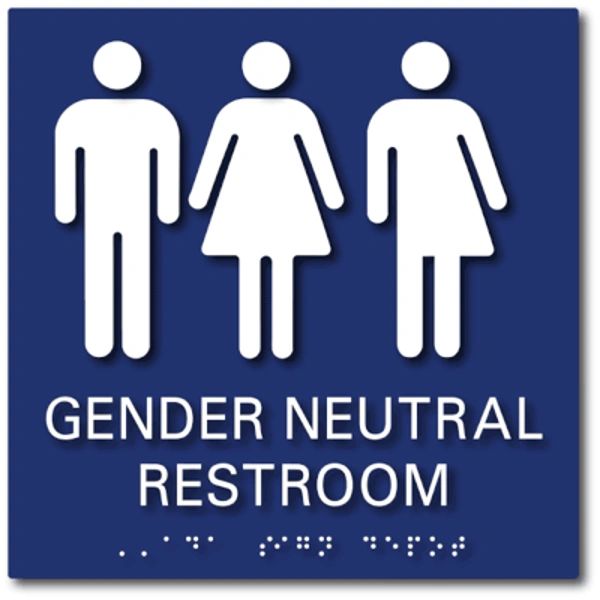
Bathrooms & Locker Rooms
It seems that whenever society discusses trans individuals, it inevitably results in misinformed rhetoric about bathrooms. For TGE people, it's incredibly exhausting to watch such constant discourse and accusations of being "bathroom predators."
Bathrooms are perhaps the most politicized aspect of TGE students' school experiences. TGE students don't always take part in these discussions and ultimately tend to focus on immediately important questions of practicality like:
"Can I go to the bathroom without being watched or outed? Can I use the right bathroom without being yelled at, outed, getting in trouble, or worse? What happens if I choose incorrectly? Will the "wrong" choice result in me being assaulted? Can I make it to a safer bathroom across the school and still make it to class on time? Why is the floor so sticky?"
The legal answer, sadly, differs by location. Some jurisdictions protect access to facilities consistent with a student's gender identity, while others require facilities to be used according to whatever their state-defined classification of sex may be. Some restrictions extend beyond bathrooms into changing areas or locker rooms, overnight accommodations, and school-sponsored travel. Litigation may also temporarily block or alter enforcement. Educators may not have ultimate authority to determine facility access, but they can still help students navigate the situation to the best of their ability.
Some supportive practices for educators:
- Know the location of gender neutral/single stall bathrooms on campus.
- Ask the student what they need. Don't assume that every TGE student wants the same arrangement or feels safest in the same location.
- Learn your specific context and rules before a problem occurs. Review current state laws, district policies, and how your administrators interpret them.
- When permitted, allow students to use facilities consistent with gender identity.
- Don't monitor or publicize a student's restroom use. Avoid escorts, distinctive (or gendered) bathroom passes, or other options that may identify the student unnecessarily.
- If your classroom, hallway, or building has them, make single-user or gender-inclusive facilities available to anybody that needs additional privacy. (While these can be valuable options, requiring only TGE students to use them may isolate, stigmatize, or out those students.)
- Consider accessibility and instructional time. A restroom across campus isn't an adequate option if reaching it regularly causes a student to be late, miss instruction, or restrict food and water to avoid using it.
- Treat misconduct as misconduct--TGE students are students and can still misbehave. Rules apply to everyone, however a student's transgender status should not itself be treated as suspicious behavior.
- Properly plan for off-campus activities. Before performances, competitions, field trips, or other events, discreetly identify available facilities and discuss them with the student. Don't wait until the group arrives to discover that the venue's rules or layout creates a problem.
- Respond to harassment promptly. If a student is followed, threatened, bullied, filmed, or confronted in a bathroom, address the behavior accordingly.
Current state restrictions can be reviewed through the Movement Advancement Project's (2026) Bathroom and Facilities Bans map. Because the landscape is changing rapidly, stay up-to-date on your local policies.
What Educators Should Review:
Don't rely on a single handbook provision or verbal assurances of your administrator(s). Depending on the issue, relevant sources may include:
- State laws and education regulations
- Current court orders affecting the state and/or district
- Student non-discrimination and anti-harassment policies
- Name, pronoun, and education record procedures
- Parental disclosure/notification requirements
- Bathroom, locker room, athletic, and travel policies
- Mandatory-reporting requirements
- Staff speech and professional conduct policies
- Collective bargaining agreements and union guidance
- Venue rules for performance and school-sponsored travel
The employee Equal Employment Opportunity policy may help show whether staff members are protected from employment discrimination. The Supreme Court held in Bostock v. Clayton County (2020) that it is illegal to discriminate against LGBTQ+ and trans individuals "on the basis of sex" in relation to their gender identity and sexual orientation. However, student-facing district policies may be completely different from TGE & LGBTQ educator policies.
In the links provided, you can also keep track of state forced-outing policies and relevant anti-trans legislation.

Supporting Students in Restrictive Contexts
TGE students should not be required to debate their existence, educate adults, disclose private medical information, or become the public face of policy disputes and culture wars. Whenever possible, adults should carry the responsibility for researching applicable policy, navigating instructional systems, and challenging harmful pedaggpractices.
- Use respectful and affirming language to the extent currently permitted.
- Prevent bullying and enforce behavioral expectations consistently
- Avoid unnecessary collection or disclosure of sensitive information
- Make universal privacy options available without singling anyone out
- Review forms, handbooks, rosters, uniforms, and procedures for avoidable barriers
- Ask administrators to provide clear, written, proactive, guidance rather than relying on verbal instructions or reactive decisions made on an as-needed basis
- Document practical harms to students such as missed instruction, harassment, or inaccessible facilities
- As needed, consult a union, professional association, or attorney before taking action that may jeopardize your employment
- Support local organizations working on student safety and Civil Rights (ex: Transgender Education Network of Texas)
- Advocate for policies that protect privacy and access for every student.
TGE students should not be required to debate their existence, educate adults, disclose private medical information, or become the public face of policy disputes and culture wars. Whenever possible, adults should carry the responsibility for researching applicable policy, navigating instructional systems, and challenging harmful pedagogical practices.
While the law may establish certain limits or restrictions, it doesn't always mean that it is moral or ethical.
Even in restrictive environments, educators can look for ways to reduce harm, maintain student privacy, oppose harassment, and protect their TGE students to the best of their ability.
Maslow's Hierarchy of Needs reminds us that if we want our students to be able to learn--they first simply have to be and feel safe.